 Lianrui

+86 18027044899

info@savinomedical.com

点击右上角
分享给朋友吧

Heavy-Duty Nitrile Gloves: The Future of Industrial Safety and Smart Manufacturing
Author:Lianrui Trading Company
Click:
Time:2024-12-26 00:00:00
Introduction: Safety Beyond Compliance
In industries such as automotive, oil and gas, chemical processing, and construction, protective gloves are more than a regulatory requirement—they are frontline defense against hazards. Heavy-duty nitrile gloves have become the preferred choice for environments where durability, chemical resistance, and latex-free safety are critical. Unlike disposable options, industrial nitrile gloves are engineered for repeated use, high abrasion resistance, and protection against hazardous substances, making them indispensable in modern workplaces.
Nitrile Technology: Why It Outperforms Latex
Nitrile is a synthetic rubber compound designed to resist oils, fuels, and chemicals far better than natural latex. Its molecular structure provides elasticity and puncture resistance, ensuring gloves maintain integrity under stress. Workers handling solvents, lubricants, or sharp-edged tools benefit from nitrile’s ability to withstand demanding conditions. This is why industries worldwide are shifting from latex to nitrile, especially in regions where latex allergies pose risks.
Certifications and Compliance: Meeting Global Standards
Industrial buyers often ask: can these gloves meet certification requirements in my market? Heavy-duty nitrile gloves undergo rigorous testing under standards such as EN ISO 374 for chemical protection. Third-party labs validate tensile strength, elongation, and barrier protection. During factory visits, clients are shown testing labs where gloves undergo chemical permeation and tensile strength evaluations. This transparency demonstrates compliance with international safety standards and reassures buyers that gloves are fit for regulated markets.
Application Scenarios: Selecting the Right Glove
Different industries require different glove specifications:
- Automotive workshops need oil-resistant gloves with textured grip.
- Chemical plants demand extended cuffs to protect against splashes.
- Construction sites benefit from thicker gloves that resist abrasion.
- Food processing facilities require FDA-compliant gloves balancing safety with tactile sensitivity.
Manufacturers often provide case studies. For example, an oil industry client requested gloves resistant to prolonged diesel exposure. After multiple prototypes and field testing, the final product was validated by both client engineers and independent labs, proving suitability for the application.
Smart Manufacturing: Evidence of Experience
Experience is demonstrated in production processes, not slogans. At Lianrui’s smart factories, automation ensures consistency and efficiency:
- Automated shuttle cars transport goods along fixed tracks, reducing forklift collisions and maximizing storage density.
- The WMS warehouse management system, integrated with RFID and web technologies, provides real-time inventory visibility and automates inbound/outbound operations.
- AGV robots connect production lines with storage racks, shortening turnover cycles and ensuring flexible coordination between raw materials and finished goods.
- Automated high-bay warehouses achieve high-density storage and full automation, enabling efficient logistics and large-capacity storage.
Clients visiting Lianrui’s facilities witness these systems firsthand, seeing how rejected batches are separated and recycled, ensuring only compliant products reach the market. This evidence builds trust in supply stability and quality consistency.
Quality Control: Expertise in Problem-Solving
Lianrui’s production lines integrate advanced inspection and packaging systems:
- A visual inspection system powered by deep learning uses 12 cameras to capture each glove from multiple angles, detecting defects such as tears or contamination. Smart alarms immediately identify the process stage causing issues, reducing troubleshooting time.
- The auto-boxing robot, developed over three years, solves industry challenges of multi-size compatibility and contamination prevention. With over 50 servo-driven axes, it achieves 98% efficiency, reduces labor dependency by 50%, and ensures gloves are boxed without human contact.
This combination of inspection and automation eliminates secondary contamination, improves consistency, and ensures gloves meet strict hygiene standards. Buyers see not just product specifications but robust systems that guarantee quality.
Risk Management: Trust Through Transparency
Industrial buyers worry about delivery schedules and after-sales support. Lianrui addresses these concerns openly:
- Delivery timelines are calculated based on production capacity and shipping routes, with contingency plans for peak demand.
- If delays occur, clients are informed proactively, and alternative logistics solutions are offered.
- After-sales service includes technical support for glove selection, replacement policies for defective batches, and clear payment terms.
Automation further reduces risks by minimizing human error, ensuring traceability, and stabilizing output. By putting these details on the table, Lianrui reduces uncertainty and strengthens buyer confidence.
FAQ
Q1: Why are nitrile gloves preferred over latex in heavy-duty industries?
Nitrile gloves offer superior chemical resistance, puncture protection, and are latex-free, reducing allergy risks.
Q2: How does Lianrui ensure glove quality?
Gloves undergo tensile strength, elongation, and chemical permeation tests. Automated inspection systems detect defects, and rejected batches are recycled.
Q3: Can nitrile gloves be used in food processing?
Yes, FDA-compliant nitrile gloves are widely used in food processing due to their safety and tactile sensitivity.
Q4: How does Lianrui manage delivery risks?
Delivery schedules are calculated with contingency plans, and clients are informed proactively if delays occur.
Recommended article
—


Recommended Products
—
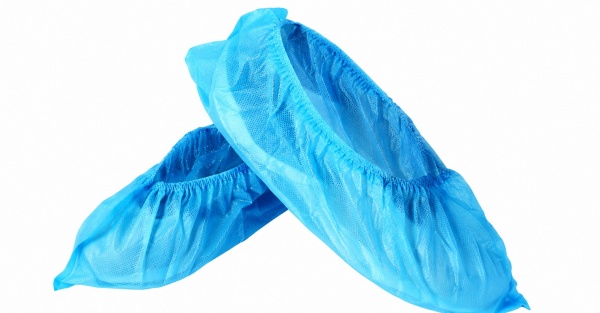
Regular Shoe Cover
●Made of SPP non-woven fabric ●Automatically sewn with elastic band ●Prevent cross-contamination from the environment or the wearer ●Protect the wearer from dust and liquids
Interview

Detectable Clip Cap
●Built-in detectable metal strip ●Convenient and quick to identify metal foreign objects ●Safe material, suitable for all kinds of people to wear ●Comfortable to wear, fits the curve of the head ●Good breathability, keep the head dry
Interview

Disposable Nitrile Gloves
● Finger textured enhanced wet and dry grip with added handling precision ● A good barrier protection agains chemicals and dangerous substances ● An alternative solution for individuals who are allergic to Natural Rubber Latex ● Free from latex protein, eliminating Type I Immediate Hypersensitivity reaction ● Custom design enhanced comfort and fit ● Latex-free, powder-free, and odor-free
$887.00

Disposable Vinyl Gloves
● Made from premium quality PVC ● Higher tensile strength and more tactile sensitivity ● DOP or DEHP free ● Compliant with food handling requirements ● No latex protein to cause allgery
Interview

Disposable Latex Gloves
● Easy donning and helps prevent rolling back. ● Softness provides superior comfort and forms fitting to hands. ● Better tactile sensitivity and durable protection.
Interview

Diamond Textured Nitrile Gloves
● Mega-diamond texture ensures 600% stronger grip than standard nitrile. ● Deep channels sweep liquids to maintain consistent grip. ● Compliant with US/EU food contact regulations. ● Latex-free design prevents allergic reactions.
Interview

Disposable PE Gloves
● Extra light weight and small volume for storage ● Excellent and tactile sense ● Ultra soft and strong ● Plasticizer free, Phthalate free, Protein free ● Eco-friendly ● Food safe, suitable for handling all
Interview

Disposable Nitrile Exam Gloves
● Manufactured under ISO 9001:2015 and ISO 13485:2016 Quality · Management System ● Textured fingertips for enhanced grip ● Custom design enhanced comfort and fit ● An alternative solution for individuals who are allergic to natural rubber latex
Interview

Disposable Latex Exam Gloves
● Low level of extractable proteins and chemical residue ● Textured for improved grip ● Excellent and tactile sense ● Beaded cuff for easy donning and prevention of roll back
Interview

Disposable Vinyl Exam Gloves
● A variety of colors available for different people or industries ● Dry and smooth coating to avoid dermatitis ● No latex protein to cause allergy ● The vinyl gloves are DOP or DEHP free ● Higher tensile strength and more tactile sensitivity ● 100% brand-new formula to enhance softness and fitness
Interview

Surgical gloves
● Medical-grade sterile design prevents cross-contamination. ● High elasticity ensures a soft, skin-friendly fit. ● Powder-free interior for easy on/off. ● Textured surface enhances grip precision. ● Single-use disposable for safe, hygienic use.
Interview

Medical Face Mask
● Pliable nosepiece for best fit ● Ultra-sonic weld ensures the strongest constructed ● Nonwoven 3Ply design, Spunbond+Meltblown+Spunbond
Interview
